Table of Contents
The short answer
A fresh accident on a sofa or carpet is dealt with in four moves. Blot it up, dilute what is left with a little cool water, blot again, then use an enzyme-type pet stain cleaner exactly as its label says and let the spot dry completely. Do not rub, do not reach for hot water or a steam cleaner, and do not cover the smell with a scented spray. Heat can set urine, vomit and other protein stains into the fibre, and perfume only hides a residue that is still there.
Old accidents are a different job. Once urine has dried, the smell lives in the residue it leaves behind, and that residue sits as deep as the liquid went: in the backing and underlay of a carpet, or in the foam of a sofa cushion. A clean that only reaches the surface improves the look and does little for the smell. That is the point at which to stop buying sprays and have the piece looked at.
Hair is simpler. It comes off with rubber and a vacuum, in that order, and it has to come off before anything wet touches the fabric.
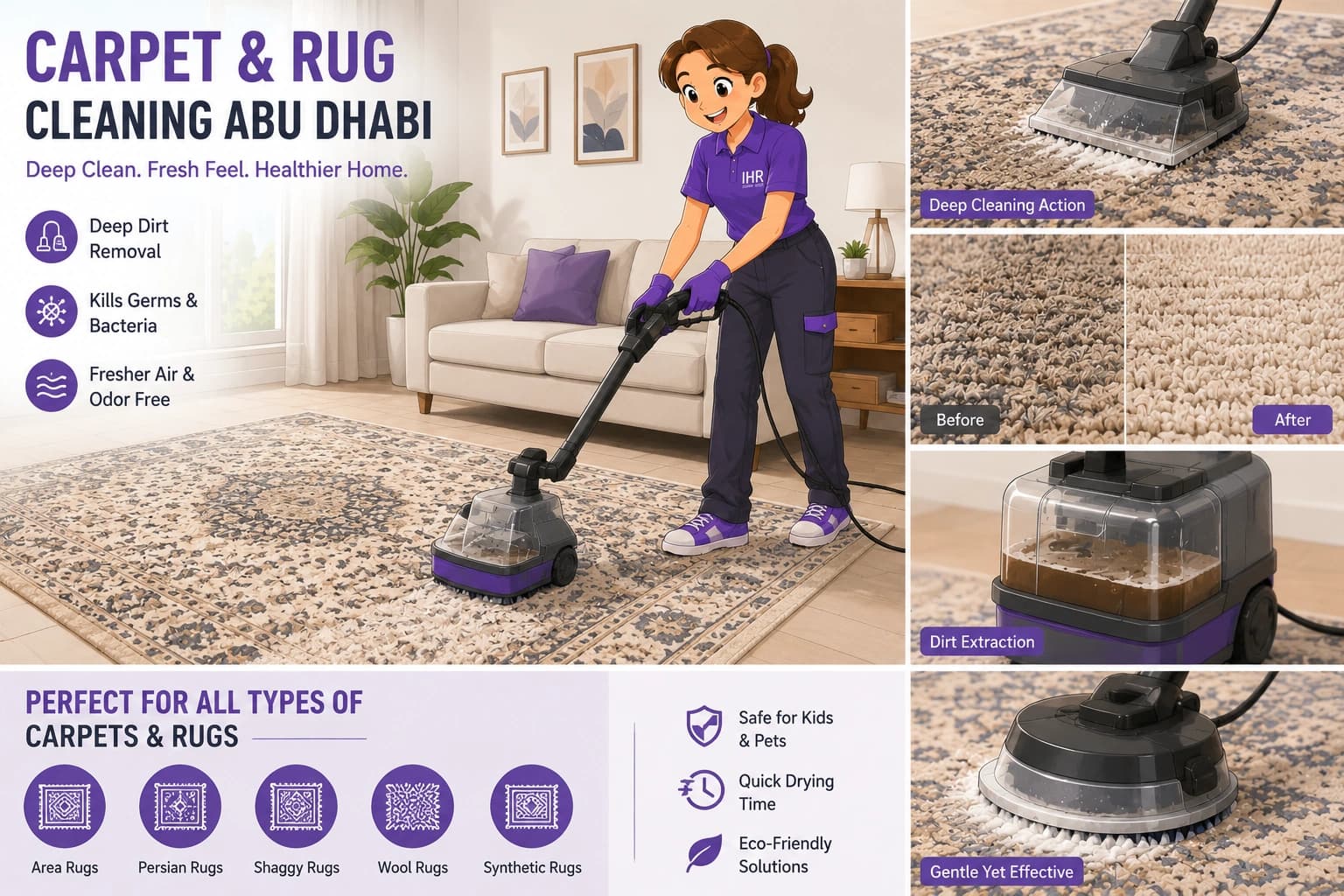
IHR Dream Cleaning cleans sofas, carpets and mattresses at home across Abu Dhabi, and pet odour and accidents are among the problems listed on our sofa cleaning page. A sofa is AED 30 per seat and a carpet is AED 10 per square metre, with the method and the final price confirmed from your photos before the visit. No careful cleaner promises that every pet stain will come out, and we do not either.
Why a pet accident is not an ordinary spill
A spilt glass of juice stays near the surface and can be rinsed out. Urine behaves differently at every stage, and knowing the stages tells you what to do and when.
What urine leaves behind as it dries
Fresh urine is mostly water. Dissolved in it are urea, salts, the pigment that makes it yellow and uric acid. While the spot is wet, most of this can still be blotted and diluted out, which is why the first ten minutes matter more than any product you own.
As the spot dries, bacteria break the urea down and ammonia is released. That is the sharp smell of an old accident. The spot also turns alkaline, and an alkaline patch left in a carpet for weeks can change some dyes for good. A yellow or faded mark that remains after cleaning is often this: colour that has gone, not dirt that is left.
What stays when the water has evaporated is a deposit of salts and uric acid crystals. Plain water and ordinary detergent do not dissolve it well. It also draws moisture from the air, which is why a spot you cleaned in February can smell again in August. The humid months in Abu Dhabi wake up old accidents that seemed to have gone.
Where the liquid goes
Liquid follows gravity. On a fitted carpet it passes through the pile into the backing, then into the underlay, and with a large or repeated accident it reaches the floor beneath. The wet patch underneath is usually wider than the mark you can see on top, because the liquid spreads sideways when it meets the backing.
Many homes here have rugs on tile or marble instead of fitted carpet. A rug lets the liquid straight through to the hard floor, where it pools and soaks back into the underside of the rug. Urine left sitting on polished stone can leave a mark of its own.
On a sofa the path is the cover fabric, then the soft wadding under it, then the foam. Foam is a sponge. A cat's accident on a seat cushion can be a small ring on the cover and a much larger patch inside.
Why steam and hot water make it worse
Urine, vomit, blood, milk and egg all contain proteins, and protein changes when it is heated. Think of egg white in a pan: once it has set, it does not wash off the way raw egg does. Hot water or steam on a protein stain can do the same thing inside a fibre, fixing both the mark and the smell where a cool rinse would have lifted them.
On an old urine spot, warmth and moisture also wake the dried residue and can release a strong smell without removing what causes it. Hot-water extraction has its place once a urine deposit has been treated and broken down, and choosing that order is part of a technician's job. As a first response at home, keep everything cool.
A fresh accident: what to do in the first ten minutes
Speed matters more than products. Everything below uses things already in the house, apart from the enzyme-type cleaner, which is worth keeping in the cupboard if you live with an animal. These cleaners contain enzymes, and often bacteria that produce them, which break down the organic residue itself. They are sold under many names. Choose one whose label says it is for pet urine on carpets and upholstery, and follow that label over any general advice, including this guide.
On a carpet
The aim is to take out as much liquid as went in, without pushing any of it deeper.
- Lift any solids with a spoon or a piece of card, working towards the middle so nothing is pressed in or spread.
- Blot with a thick pad of plain white paper towel or an old white cloth. Press down firmly, or stand on the pad, and replace it as it fills. Keep going until a fresh pad comes up almost dry. Coloured cloths and printed napkins can leave their own dye in a wet carpet.
- Pour a small amount of cool water onto the spot, about as much as the accident itself, and blot it out again. Do this two or three times. You are diluting what is left and lifting it out, not washing it down.
- Apply the enzyme-type cleaner as its label directs. Test it on a hidden corner first if the label asks you to, use enough to reach as deep as the urine went, and leave it for the full time stated. These products work slowly and only while damp.
- Blot once more, then let the spot dry in moving air with the AC or a fan running. On a thick carpet, lay a dry white towel over the spot with something heavy on top for a few hours. The towel draws moisture up from below.
- Keep the animal, and any small children, off the area until it is completely dry, and follow any waiting time on the label.
On a rug over tile or marble
Deal with the floor first. Lift the rug, wipe up what is underneath, wash the floor with a neutral floor cleaner and dry it. Then treat the rug from both sides, with a folded towel under the spot while you blot from above.
Do not put the rug back until the floor and the underside of the rug are both dry. A damp rug on a hard floor can stay damp for days, and that is how a small accident becomes a musty rug. If the rug is handmade, wool or silk, stop after blotting with cool water and read what handmade rugs need before any wash before you put a product on it.
On a sofa
Start with the care label, which is usually under a seat cushion or on the underside of the frame. If it says the fabric must be cleaned with solvent only, or vacuumed only, water can leave a ring of its own. In that case blot dry, apply nothing and send photos to a cleaner. For fabrics that accept water-based cleaning, the method is the carpet method with less liquid. The label codes are explained in our guide to what you can safely do to a sofa yourself.
Loose covers with a zip can come off. Rinse the patch from the back with cool water, then wash the cover as its label allows, on a cool programme. Let it dry in the air and smell it once dry before any heat goes near it, because a hot tumble dryer can set what the wash left behind. Where you can, wash all the covers of a set together so the colour stays even.
If the liquid reached the foam, take the foam out of its cover and press dry towels into it to draw out what you can. Apply the enzyme-type cleaner as far in as the label allows, then stand the cushion on its edge in moving air until it is dry all the way through. That can take a day or more. Foam that still smells once fully dry has usually taken in more than can be treated from the outside, and a new insert cut by an upholsterer is often the cleaner answer.
On leather and faux leather, wipe at once with a dry cloth, then a barely damp one, and dry the surface. Liquid still finds its way through seams and stitch holes into the filling, so check the smell again the next day. Use only products made for leather, which is also how our team cleans leather seating.
On a mattress
A mattress cannot be rinsed, so use as little liquid as possible. Blot hard, dab with a cloth wrung out in cool water, blot again, use the enzyme-type cleaner as its label directs, and leave the bed stripped with the AC on until the patch is dry.
On our mattress cleaning page, urine accidents are treated with an enzyme-based product that breaks the odour down instead of masking it, and we say plainly that fresh accidents respond better than old ones. A washable waterproof protector is the only real prevention on a bed that a pet sleeps on. The rest of mattress care is covered in our guide to cleaning a mattress at home.
Vomit and other accidents
Vomit, diarrhoea and blood are protein stains too, so the rule about cool water holds. Lift the solids first without pressing. Vomit also carries stomach acid and often food colouring, both of which can mark a fabric within minutes, so a pale stain may remain even after a prompt clean.
Then follow the same steps as for urine. If the first product leaves a shadow, do not try a second and a third on top of it. Each added chemical makes the mark harder for a professional to treat later.
Seven things that make it worse
Many pet stains that will not come out were made permanent by what was done to them afterwards. These are the usual causes.
| What people try | What it does |
|---|---|
| A steam cleaner or hot water | Heat can set the proteins and the yellow pigment into the fibre. |
| Rubbing or scrubbing | Spreads the liquid sideways, pushes it deeper and roughens the pile, leaving a fuzzy patch that shows even when clean. |
| Bleach | Takes colour out of the fabric for good. Bleach must also never meet ammonia, and old urine gives off ammonia. |
| Ammonia-based cleaners | Urine breaks down into ammonia, so to the animal the spot can smell like a place that has already been used. |
| Scented sprays and deodorising powders | Cover the smell for a day or two. The residue is untouched, and powder is hard to vacuum back out of a pile. |
| Pouring on water or shampoo | Carries the urine further into the underlay or the foam and leaves the piece wet for days. |
| One product on top of another | Detergents and disinfectants can stop an enzyme-type cleaner from working, and mixed residues are harder to treat later. |
Vinegar and baking soda
Both are suggested everywhere. White vinegar is a mild acid and can dull the ammonia smell of a spot for a while, but it does not break down the residue, and it must be kept away from marble and other natural stone, which acid etches. Baking soda absorbs some odour at the surface and nothing below it, and a thick layer is difficult to vacuum out completely. Neither is a treatment for an accident that has soaked in.
Old accidents and the smell that keeps coming back
If the room smells and you cannot see why, or a spot you treated months ago has returned, the residue is still there. The first job is to find all of it.
Finding the spots
Your nose, close to the surface, is the most reliable tool. Check the places animals choose: corners, the edge of a rug, behind a sofa, beside a door, under a bed. Cats that spray mark upright surfaces, so check the sides and back of the sofa and the lower part of the curtains at cat height, not only the floor.
A small UV torch helps in a darkened room. Dried urine usually shows as a dull yellow-green glow. Other things glow as well, including some detergent residues and fabric brighteners, so confirm each patch by smell before you treat it. Mark the outline with a few pieces of masking tape, because the patch disappears when the lights go on.
For a rug, turn it over. A stain that is larger and darker on the back than on the face has gone right through, and the floor under it has had the same treatment.
When the underlay or padding is affected
A surface clean reaches the pile and, with extraction, some of the backing. It does not reach an underlay that has been soaked, and it cannot reach the floor under that. The signs that an accident has gone deeper than a clean can follow are consistent.
- The smell fades after cleaning and returns within days, or returns every time the weather turns humid.
- The same spot has been used more than once. Animals go back to a place that still smells of urine to them, long after you have stopped noticing it.
- The carpet feels stiff or slightly sticky at the spot, or the backing has yellowed when a corner is lifted.
- On a sofa, the smell is strongest when someone sits down and air is pushed out of the cushion.
What a deep accident takes to put right
For a fitted carpet, the usual trade answer is to lift the carpet at that spot, cut out and replace the affected piece of underlay, clean and seal the floor beneath, treat the back of the carpet and refit it. That is a carpet fitter's job, sometimes alongside a cleaner, and it is worth doing only if the carpet itself is still sound.
For a loose rug, the answer is a wash that flushes the whole thickness of the rug, front and back, and then dries it fully. Whether that can be done at your home depends on the rug, so photograph both sides when you ask for a quote.
For a sofa, seat cushions with zipped covers are the lucky case: the covers can be cleaned and the foam replaced. Fixed seats and backs, where the foam is built in, can only be treated from the surface, and a cleaner should tell you that before starting.
Pet hair on sofas and carpets
Hair clings for three reasons: static, the weave of the fabric, and the light film of skin oil on each hair. Suction alone often leaves it behind because the hair is worked into the surface, not lying on it. Loosen it first, then vacuum.
On a sofa
Do this before any damp cleaning, because wet hair mats into the weave and is far harder to remove once it has dried there. Expect more work on velvet, chenille, bouclé and loose loops, which hold hair, than on tight smooth weaves and leather, which let it go.
- Take the seat and back cushions off and work on each piece separately.
- Wipe the fabric with a slightly damp rubber glove or a rubber-edged window squeegee, pulling in one direction. Rubber grips hair and rolls it into lines you can pick up by hand.
- Vacuum slowly with the upholstery tool, including the seams, the gaps down the sides and back, and the platform under the cushions, where most of the hair and grit ends up.
- Finish with a lint roller on the arms and the top of the back if any hair remains.
On carpets and rugs
A rubber broom or squeegee pulled towards you in short strokes brings up hair that the vacuum has been passing over. Then vacuum slowly in two directions. Empty the bin or change the bag before it is full, and clean the filters as the maker advises. Hair and the fine skin flakes animals shed block filters quickly, and a vacuum with a blocked filter moves hair around without picking it up. Check the brush bar as well, since hair winds round it until it stops turning.
Animals also bring sand in on their paws, which in Abu Dhabi is as hard on a carpet as the hair is. A towel by the door for paws after a walk, and a mat the animal has to cross, keep a good part of it out. The routine for grit is set out in keeping a carpet clean between professional washes.
When the whole room smells of the animal
A home can smell of dog or cat with no accident anywhere. The source is ordinary: skin oils, saliva and the fine flakes of skin every animal sheds, rubbed into the places it lies. The arm of the sofa where a head rests, one seat cushion, the rug by the balcony door. With the windows shut and the AC running for most of the year, the smell has nowhere to go and settles into the fabric.
- Vacuum the animal's favourite seat and rug twice a week, not only the floor.
- Wash throws, cushion covers and the animal's own bedding every week, as their labels allow. The bedding is usually the strongest source in the room.
- Dry a wet animal before it reaches the sofa. Damp fur leaves far more smell in a fabric than dry fur.
- Brush the animal regularly, outdoors or on the balcony, so loose hair comes off there and not on the upholstery.
- Rinse or replace the AC's washable filters as the maker advises. They collect hair and skin flakes, and the air passes through them all day.
When the fabric itself needs washing
Skin oil is greasy, and grease does not vacuum out. Over months it builds into a film that holds dust and smell, and the animal's usual spot turns darker than the fabric around it. At that stage only a wash removes it.
Our general advice is a professional clean of sofas and carpets every six to twelve months, and homes with pets usually benefit from the six-month end of that range. The reasoning for each kind of fabric is in how often sofas, carpets, mattresses and curtains should be cleaned.
What a professional clean can and cannot do
A professional visit brings a machine that rinses a fabric and pulls the water back out, and products matched to the fibre and the stain. It still has limits, and it is better to know them before you book. The general method for any sofa or carpet is in our sofa and carpet cleaning guide. This section covers what changes when a pet is the cause.
What our sofa visit includes
Our published process for a sofa runs in this order.
- Photos first. After you book, you send the number of seats, the fabric if you know it and clear pictures of the marks, and we confirm the method and the price before the visit.
- Inspection. The technician checks the fabric and tests an out-of-sight spot for colour-fastness, because not every fabric takes the same treatment.
- Dry vacuuming of the seams, the crevices and the underside of the cushions. This is where the hair and the grit come out.
- Spot treatment. Marks are treated one at a time with a product matched to the stain and the fabric. Pet odour and accidents are treated with odour-neutralising products chosen for the fabric, along with cleaning of the affected area.
- Shampoo or extraction where the fabric allows it, using a low-moisture method so the cushion filling is not soaked.
- Drying guidance for your fabric and your room before the technician leaves.
Carpets and rugs
Carpets and rugs follow the same logic: inspection of the fibre, dust removal before anything wet, individual treatment of stains, then shampoo or hot-water extraction suited to the fibre, and deodorising. Pet-affected carpets get extra attention to odour treatment. The details are on the carpet cleaning page, and the differences between the methods are explained in shampoo, steam or dry cleaning.
What it cannot do
It cannot promise a result before the piece has been seen. Whether a pet stain lifts depends on its age, the fibre, how deep it went and, above all, what has already been put on it. Our technicians give their assessment after inspecting and before starting. Where a stain cannot be lifted safely they say so, and they do not keep working the fabric until it is damaged.
It cannot reach foam or underlay that has been soaked through. It cannot put back colour that urine or a household product has taken out: that is colour loss, like a bleach spot, and no cleaning product restores it. And if the animal returns to the spot within days, the smell that draws it there is still present, usually below the surface.
A mark that reappears as the fabric dries is a different matter. This is wicking: residue from deep in the pile or the cushion rises to the surface with the moisture. It is common with deep stains, and a follow-up spot treatment usually deals with it. Tell us if it has not faded after a day or two.
What to tell us when you book
With pet stains the first attempt is the one that counts, so give the technician this in advance.
- What animal, and whether the marks are urine, vomit or something else.
- How old each mark is, and whether the same place has been used more than once.
- Every product already used on it, including home remedies. This changes what can safely be applied next.
- The fabric or fibre: the sofa's care label, or for a rug whether it is wool, silk, synthetic or handmade.
- Photos of each mark, and of the back of a rug at the same spot.
- Whether anyone in the home, or the animal, reacts to fragrances or cleaning products, so it can be discussed before the visit and not during it.
On the day, with animals in the house
Put pets in another room with the door closed before the team arrives, and keep them there through the visit. The machines are loud, hoses and cables cross the floor, and our terms ask customers to arrange a safe place for pets during any visit.
Afterwards, keep animals off everything that was cleaned until it is completely dry. For most sofa fabrics that is a few hours with the AC or a fan running. For carpets it can be several hours to most of a day. The technician tells you the expected time before leaving.
What it costs
Fabric care is priced by the item, not by the hour. A sofa is AED 30 per seat, so a three-seater is AED 90. Carpet is AED 10 per square metre, and a small rug starts from AED 50. Mattresses are AED 79 for a single, AED 99 for a double or queen and AED 119 for a king. Every price includes VAT.
The smallest order of priced items on one visit is AED 100, and different items count towards it together. A three-seat sofa and a rug of two metres by three, which is six square metres, come to AED 150. In a home with a pet those are usually the two pieces that need it first: the seat the animal sleeps on and the rug in front of it.
If the home is due a deep clean as well, fabric items booked with a deep clean or a move-in or move-out clean are 10% off. The method and the final price are confirmed from your photos before the visit, and you pay by card from My bookings on this website once the price is confirmed. Every figure is on our price list.
Making the next accident less likely
Cleaning is half of it. The other half is removing the reasons an animal returns to a spot.
- Keep litter trays clean and easy to reach, and give a dog enough trips outside in the hot months, when walks tend to get shorter.
- Cover the favourite seat with a washable throw and the bed with a waterproof protector. Both go in the washing machine. A sofa does not.
- Choose rugs that can be washed for the places the animal sleeps and eats, and keep a valuable rug in a room the animal does not use.
- Block access to a spot that has been used repeatedly until it has been cleaned properly, with a piece of furniture or a closed door.
When it is a question for a vet
A house-trained animal that starts having accidents, or an older animal that begins to leak in its sleep, may be unwell. That is a question for a vet, not for a cleaner, and no amount of cleaning will stop it. New marking by a cat often follows a change in the home, such as a move, a new animal or a new baby. A vet or a behaviourist is the right person to ask about that too.
Common questions
Will professional cleaning remove the smell of pet urine completely?
Often, when the accident is recent and stayed near the surface. Not always, when it is old, repeated or has soaked into underlay or foam. Nobody can tell which from a description. If the technician finds that the source is below what a clean can reach, you are told before the work starts, so you can decide whether a surface clean is still worth having.
Can I use my own carpet-washing machine on pet stains?
Only after the spot has been treated with an enzyme-type cleaner and has dried, and then with cool water. Used first, with hot water and detergent, a home machine tends to do three unhelpful things at once. It heats the residue, it spreads it across a wider area, and it leaves the underlay wet, because a home machine recovers only part of the water it puts down. If the room smells worse the day after you washed the carpet, this is what happened.
Is cat urine harder to deal with than dog urine?
Usually. Cat urine is more concentrated, the smell is stronger and cats return to the same place more stubbornly. The method is the same. The need to find every spot, upright surfaces included, is greater.
Should I clean it or replace it?
Clean when the accidents are few, recent or in different places, and the piece is otherwise in good condition. Think about replacing the underlay, the foam insert or the piece itself when one area has been used for months, or when the smell returns after a proper clean.
For a rug, weigh the cost of a full wash against the rug. An inexpensive machine-made rug that has been soaked many times is rarely worth a specialist wash. A good wool rug usually is.
Are the products used safe for my pet?
We do not answer that with a blanket yes, and a product that calls itself pet-friendly still comes with instructions that have to be followed. What we can say is practical. Keep animals out of the room during the work and off the fabric until it is fully dry. Ask the technician what was applied and where. Follow the instructions on anything you use yourself, including how long to keep animals away.
Birds, fish, reptiles and small caged animals can be more sensitive to sprays and fragrances than cats and dogs, so move cages and cover tanks, or put them in another room, before any cleaning starts. If your animal has a health condition, or tends to lick or chew fabric, ask your vet before the visit.
Booking a clean after a pet accident
If the accident is fresh, do the first aid above today and do not wait for a visit. If it is old, or the smell has come back after you treated it, have it looked at.
Book sofa cleaning by the number of seats, add carpets, rugs or mattresses to the same visit, and send photos of each mark after booking. We confirm the method and the price before anyone travels. Sofa and carpet cleaning for family homes with children and pets is a regular booking for us in townhouse communities such as Al Raha Gardens, and the service is the same across the rest of Abu Dhabi. You can book online in a few minutes.